40 W · light top-ups
Small energy budgets, phones and lights. A modest panel can charge a compatible battery without replenishing a full camping day.
US solar comparison · USD price snapshots
Compare six portable panels from EcoFlow, Jackery and BLUETTI. See price, useful daily-energy estimates and suggested pairings with our nine power stations.
Prices are for one standalone panel, in USD, before tax, shipping or extra cables. Combined costs below add the two standalone prices; manufacturer bundles may cost less. Stock and prices can change. These are ordinary manufacturer links; affiliate commissions are not active.
Small energy budgets, phones and lights. A modest panel can charge a compatible battery without replenishing a full camping day.
A middle ground for short trips and lower daily use. About 300–330 Wh in our four-sun-hour example, before station limits.
About 600–660 Wh in the same example. Still below our calculator’s 751 Wh daily battery budget including its reserve for the default camp.
Panel watts are generation capacity; station watt-hours are storage. The figures below assume four peak sun hours and a 75% yield factor. They are panel-side planning estimates before station clipping, not guaranteed energy or full-charge times.
| Panel | Price USD | Rated W | USD / rated W | Example Wh/day |
|---|---|---|---|---|
| EcoFlow 110W Portable Solar Panel | $259 | 110 | $2.35 | 330 |
| EcoFlow NextGen 220W Bifacial | $399 | 220 | $1.81 | 660 |
| Jackery SolarSaga 40 Air | $109 | 40 | $2.73 | 120 |
| Jackery SolarSaga 200W | $379 | 200 | $1.90 | 600 |
| BLUETTI SP100L · 100W | $199 | 100 | $1.99 | 300 |
| BLUETTI SP200L · 200W | $349 | 200 | $1.75 | 600 |
Cost per rated watt is purchase price divided by rated watts. Lower is cheaper per rated watt, not a verdict on quality or real-world yield.
These are single-panel starting points, chosen from manufacturer pairings or published electrical specifications. They are not maximum-size solar arrays or promises of charging speed. Follow the exact model’s manual and check the supplied cable, polarity and cold-weather voltage before connecting.
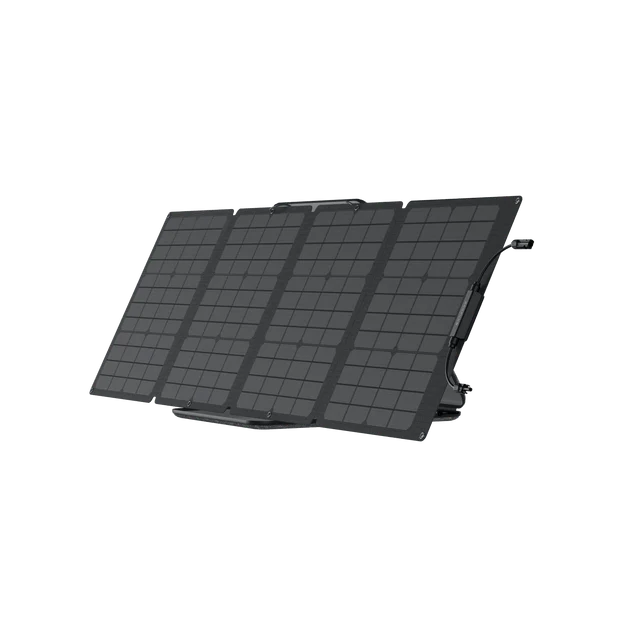
$259 USD · one panel
110 W rated · 330 Wh/day example
Compact top-up option. Listing shows sold-out / preorder messaging.
Open-circuit voltage (Voc): 21.8 V. Short-circuit current (Isc): 6.5 A. These are panel ratings, not station input limits.
Solar connectors → station XT60/XT60i solar input. Listing says solar-to-XT60 cable included; confirm the supplied cable for your station.
$299 station + $259 panel = $558 USD
Lower-output, single-panel top-up; published voltage/current sit within the station input limits.
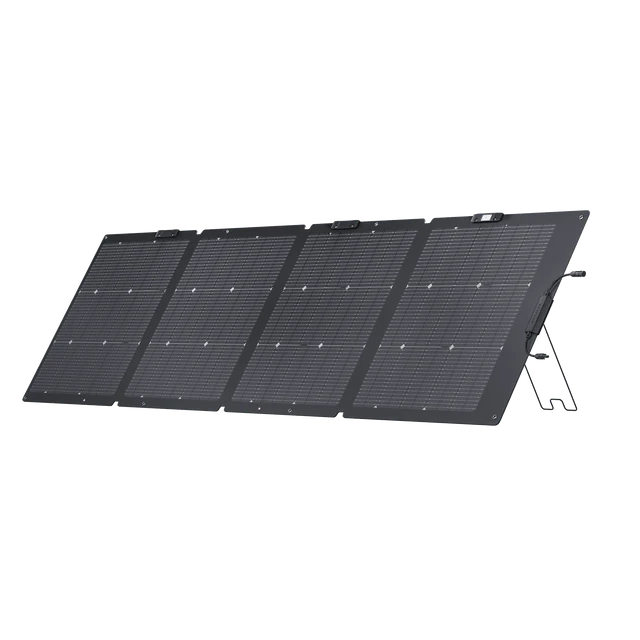
$399 USD · one panel
220 W rated · 660 Wh/day example
More replenishment per panel. Front rating used; rear gain excluded. Listing shows sold-out / preorder messaging.
Open-circuit voltage (Voc): 21.5 V. Short-circuit current (Isc): 12.4 A front. These are panel ratings, not station input limits.
Solar connectors → XT60i input; panel box lists an XT60i charging cable.
$299 station + $399 panel = $698 USD
Faster single-panel option, capped by the station’s 220 W input. No extra rear-side output is promised.
$669 station + $399 panel = $1,068 USD
One panel on one solar input. Compatible electrical ratings; 220 W does not use the station’s full solar-input capability.
$879 station + $399 panel = $1,278 USD
One panel on one solar input. Compatible electrical ratings; 220 W does not use the station’s full solar-input capability.
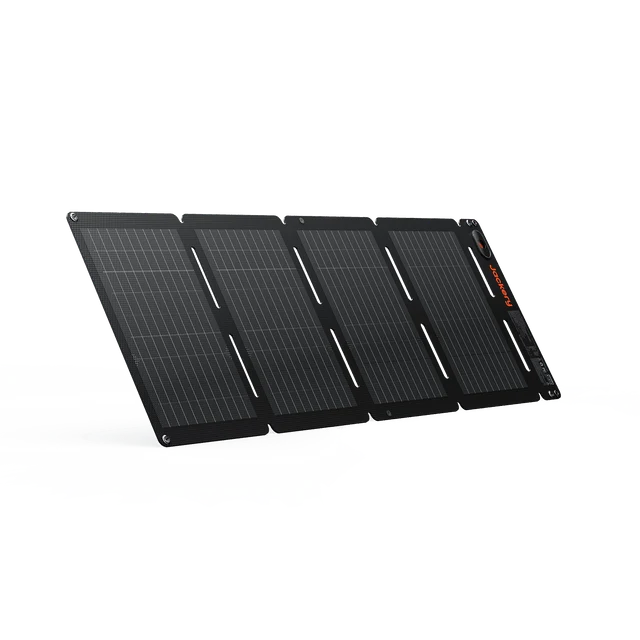
$109 USD · one panel
40 W rated · 120 Wh/day example
Light top-ups for the Explorer 300 v2, sold together by Jackery. Confirm stock and exact panel revision.
Open-circuit voltage (Voc): Not listed in the checked page text. Short-circuit current (Isc): Not listed in the checked page text. These are panel ratings, not station input limits.
Use the included multifunction solar cable’s DC8020 station connection. Do not use the USB phone output for this pairing.
$299 station + $109 panel = $408 USD
Manufacturer-offered station/panel pairing. Use the supplied DC8020 solar cable. Slow replenishment: 40 W is below the 100 W station limit.
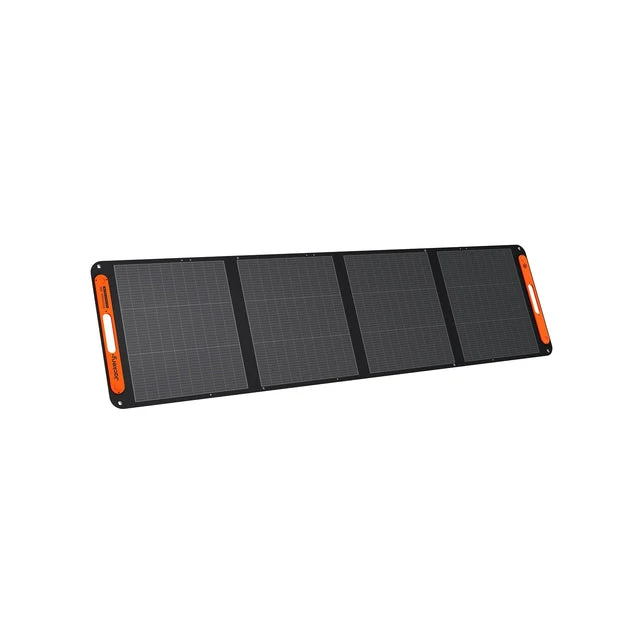
$379 USD · one panel
200 W rated · 600 Wh/day example
Current bifacial listing. Use one panel on one station input. Confirm stock; front STC rating used.
Open-circuit voltage (Voc): 22 V ±5%. Short-circuit current (Isc): 12.5 A ±5%. These are panel ratings, not station input limits.
Included multifunction solar cable → DC8020 station input; included DC7909 adapter is for other models.
$559 station + $379 panel = $938 USD
Manufacturer-offered pairing. One panel to one DC8020 input; the 10.5 A input limit can clip this newer panel’s rated current, reducing yield.
$899 station + $379 panel = $1,278 USD
Manufacturer offers this station with SolarSaga 200W panels. Here we price ONE panel to ONE DC8020 input; a two-panel bundle is a different purchase.
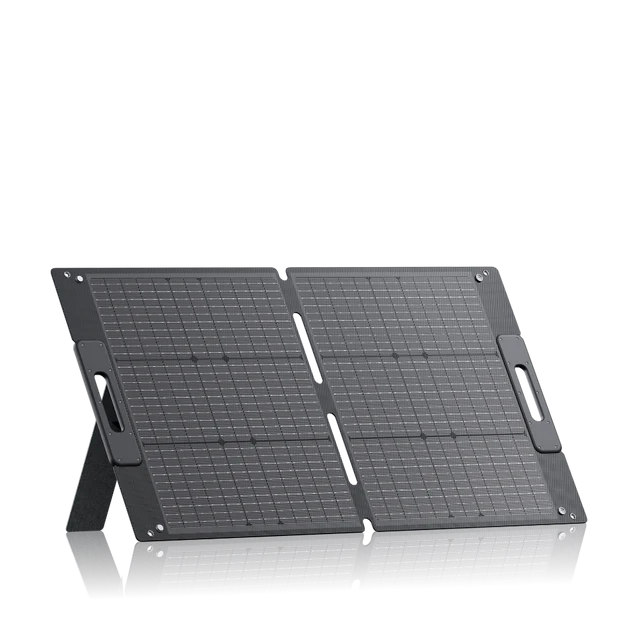
$199 USD · one panel
100 W rated · 300 Wh/day example
Conservative single-panel choice for Elite 30 V2. Page has mixed availability labels; confirm stock.
Open-circuit voltage (Voc): 24.62 V. Short-circuit current (Isc): 5.13 A. These are panel ratings, not station input limits.
MC4 leads → the station’s model-specific BLUETTI solar charging cable. Confirm that cable is in your station package.
$249.99 station + $199 panel = $448.99 USD
Single-panel shortlist based on published ratings and BLUETTI’s SP100L compatibility statement. 24.62 V open circuit is below 28 V at rated conditions; verify cold-weather Voc before use.
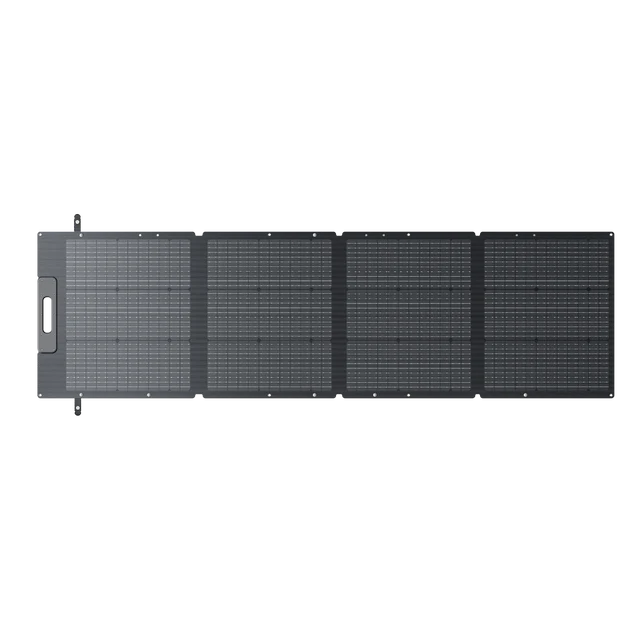
$349 USD · one panel
200 W rated · 600 Wh/day example
Manufacturer lists AC180 and Elite 200 V2. Shipping notices conflict; confirm dispatch. Listing photos are illustrative: check delivered model label.
Open-circuit voltage (Voc): 24.6 V. Short-circuit current (Isc): 10.8 A. These are panel ratings, not station input limits.
MC4 leads → the station’s model-specific BLUETTI solar charging cable. Confirm package contents.
$449 station + $349 panel = $798 USD
Explicitly listed by the panel manufacturer. Use the AC180 solar cable; its 10 A input can limit panel output. Do not assume a sustained 200 W.
$899 station + $349 panel = $1,248 USD
Explicitly listed by the panel manufacturer. One panel is a simple top-up option, well below this station’s 1,000 W input capability.
No researched pairing matches these filters. This does not mean the products are incompatible. Choose “All brands” to see our suggestions for this station.
Our default camp uses 532 Wh/day at the devices. At 85% delivery efficiency and a 20% planning margin, its daily battery-energy target is about 751 Wh. Four peak sun hours and a 75% solar yield factor suggest around 251 W of panels. Even a compatible 220 W panel can fall short of that budget; carry enough stored energy or reduce your loads.
Formula: panel rated watts × peak sun hours × yield factor. At two peak sun hours, halve the four-hour examples above. Input current limits, shading, temperature and charge taper can reduce the result further. Battery size alone does not determine the right panel.
Work out your daily power budget →We favoured simple same-brand connections and linked the exact panel listing and station specification source alongside each match. Jackery’s 300 v2/40 Air and larger SolarSaga combinations are manufacturer-offered pairings. BLUETTI lists AC180 and Elite 200 V2 on the SP200L page; the SP100L shortlist also checks Elite 30 V2’s lower voltage limit. EcoFlow matches use published panel and station input ratings. These are researched recommendations, not hands-on certifications or an exhaustive compatibility matrix.
For Jackery Explorer 2000 v2, use the standard model’s 400 W total solar limit: some store sections mix in other models’ higher limits. For DELTA 3 Max, use the standard Max specifications, not Max Plus. The EcoFlow-authored Max manual (retailer-hosted PDF) is the reference for that distinction.
All prices are US listings, not Australian quotes. Compare all nine power stations or send a correction.